

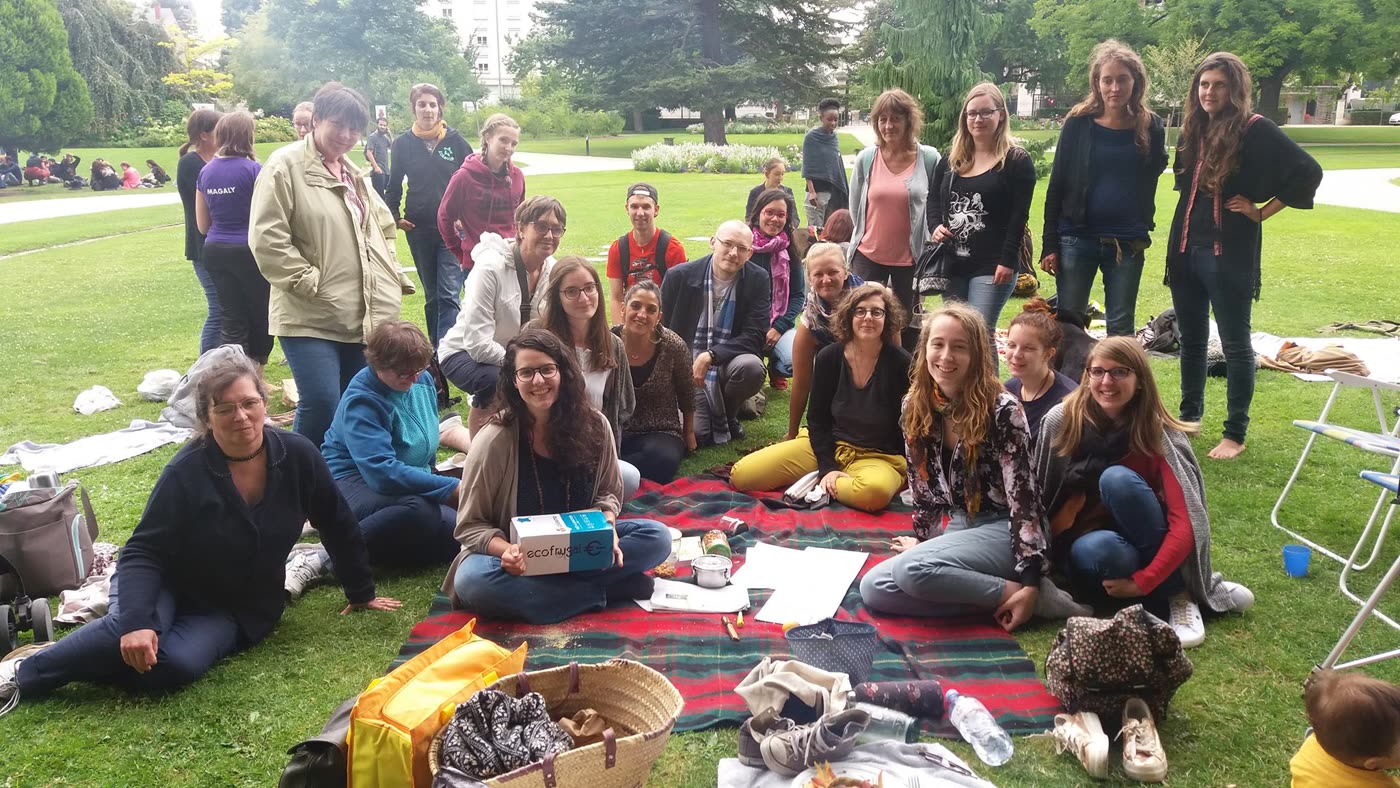
A good time together: does it really change anything?
That's the question we are asked, and that we ask ourselves. So we surveyed our community in 2020 and in 2024, and reread the workshop reports written by those who ran them. Here is what we have learnt, including what we don't know yet.
Sources: 2020 Solution-holders Observatory and Le Guide Écofrugal, 2025. Self-reported results.
First of all, a good time
Before talking about the environment, let's talk about what happens around the table. Participants give the time spent during the workshop a score of 8.2/10, and the Ambassadors who run it give it 8.7/10. Those who run workshops want more: 62.5% of them plan to organise another one, and 37.5% probably will (2020 Observatory).
“We had an amazing hour and a half!”Berthille, Ambassador
“A constructive evening for everyone, in a great atmosphere!”Jérémie, Ambassador
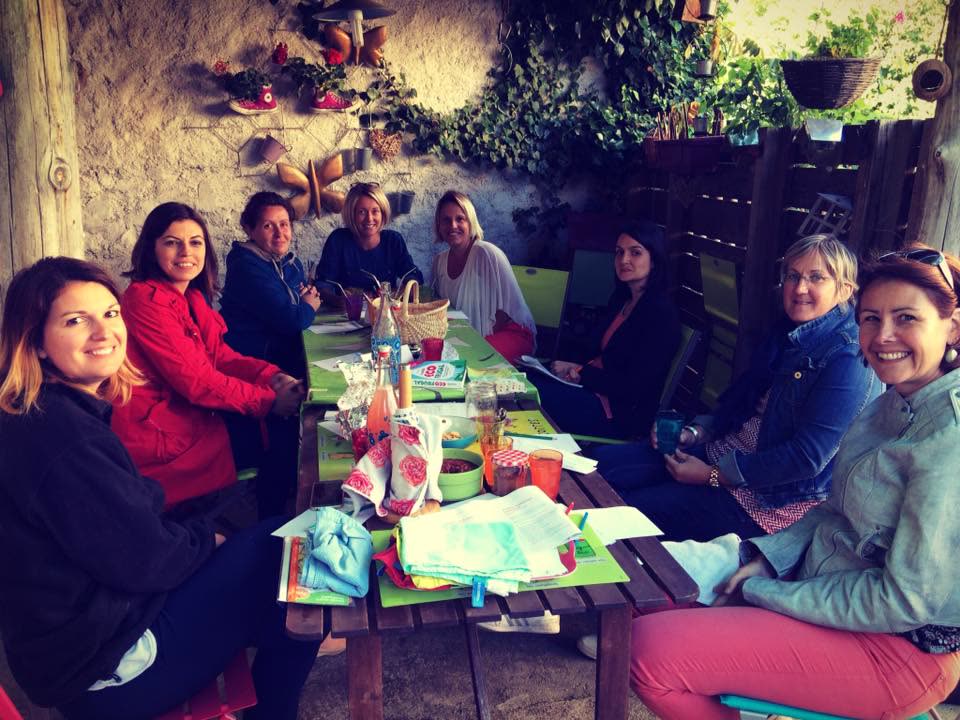
This good time brings something else too. At Orange, Emmanuelle notes that the ideas exchanged are "just as good for our quality of life at work as for our wallet and the company's finances". Sociologist Gaëtan Brisepierre sees the same effects: greater well-being at work, appeal for younger people, more cross-team work and conviviality.
“Organising or taking part in a workshop is rewarding and adds to the pride of working at Orange!”Emmanuelle, Orange
Change happens in three stages
Nobody changes their life on leaving a workshop. What we observe is more like a journey in stages, where everyone moves forward according to their constraints and wishes.
1. Discovering
66% of participants discover new practices (2020 Observatory), including those who thought they were already very advanced: a repairer's address, a farmers' market, or the fact that a broccoli stalk is perfectly edible once peeled.
2. Getting motivated
This is where the glass wall comes down. 77% of people with little environmental commitment see their motivation grow after this time of sharing (2020 Observatory). And those who already act realise how much they were doing without knowing it, and leave with renewed energy.
“When you've never tried, it seems really complicated; colleagues' stories show that it's possible.”Emmanuelle, Orange
3. Putting it into practice
57% of participants adopt new habits in their private life, for example cycling to work. And once the habit is formed, going back is rare: it's the ratchet effect.
Why does it work? Because the person telling the story has nothing to sell: they talk about what they have tried at home, and that's why we believe them. And because we more easily adopt what we see done by someone like us.
From home to the office, and back
The water bottle, the bike, swapping, fighting waste: these practices don't stop at the office door. 43% of participants also adopt them at work, and 55% when the workshop takes place at a company (2020 Observatory). We didn't expect it, but the workplace has become a real "third place" of the transition: it's often easier to gather a dozen people there, and lunchtime lends itself very well to it.
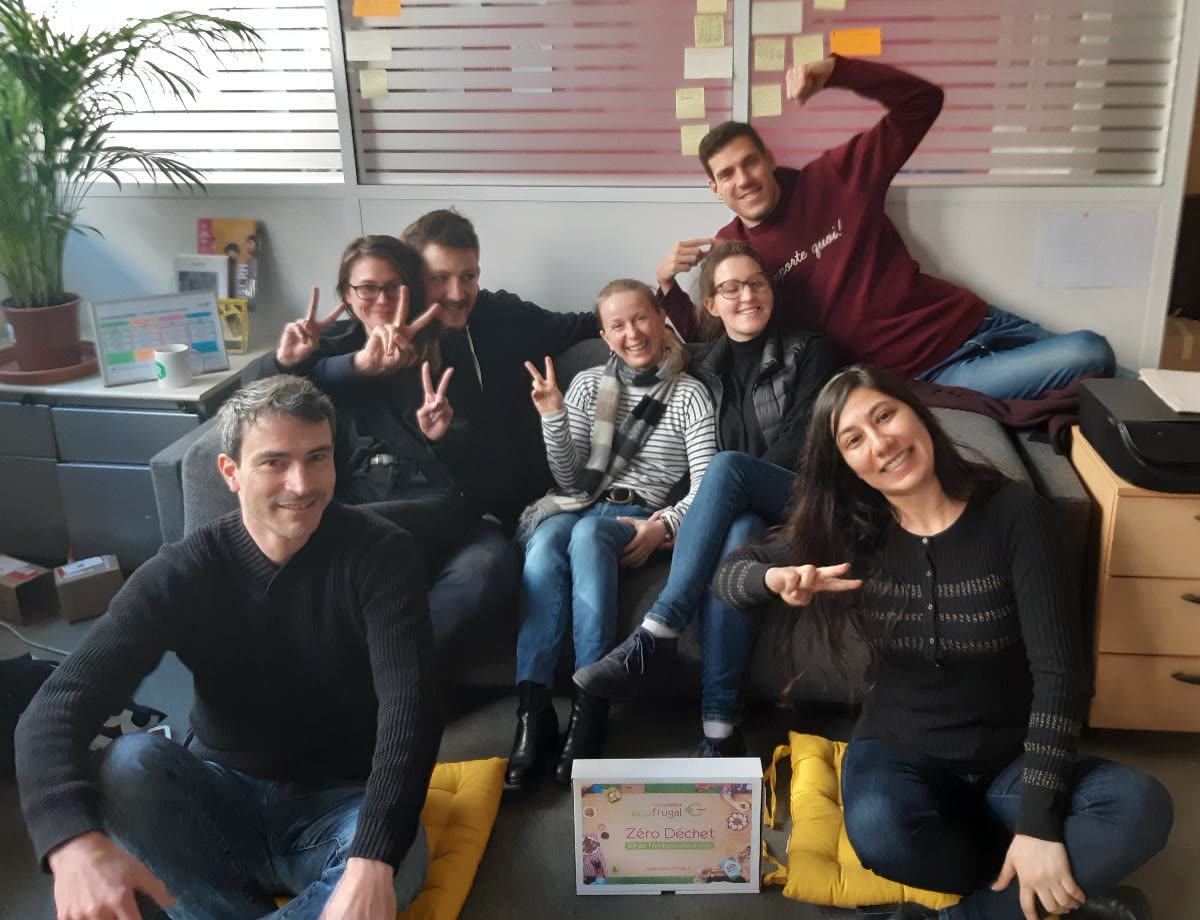
It works both ways: 40% adopt at work practices discovered elsewhere, and 55% adopt at home practices discovered at work (2020 Observatory). Sociologist Gaëtan Brisepierre, with whom we have often spoken in public, calls these people "transferrers": employees who bring their home practices to work and try to spread them. They often fly under the radar, but some signs don't lie: cycling to work, bringing a packed lunch, having a mug or a water bottle.
Around the table, there is no boss and no expert, and departments mix.
“I met some really interesting people. We'd been working next to each other for 6 months and I hadn't even noticed them. It brought us together.”Testimonial, 2020 Observatory
When the workshop is over, the story goes on
33% of participants want to become Ambassadors in turn (2020 Observatory), and 42% of participants at work have contributed to a collective action with their colleagues. In practice, it looks like this.
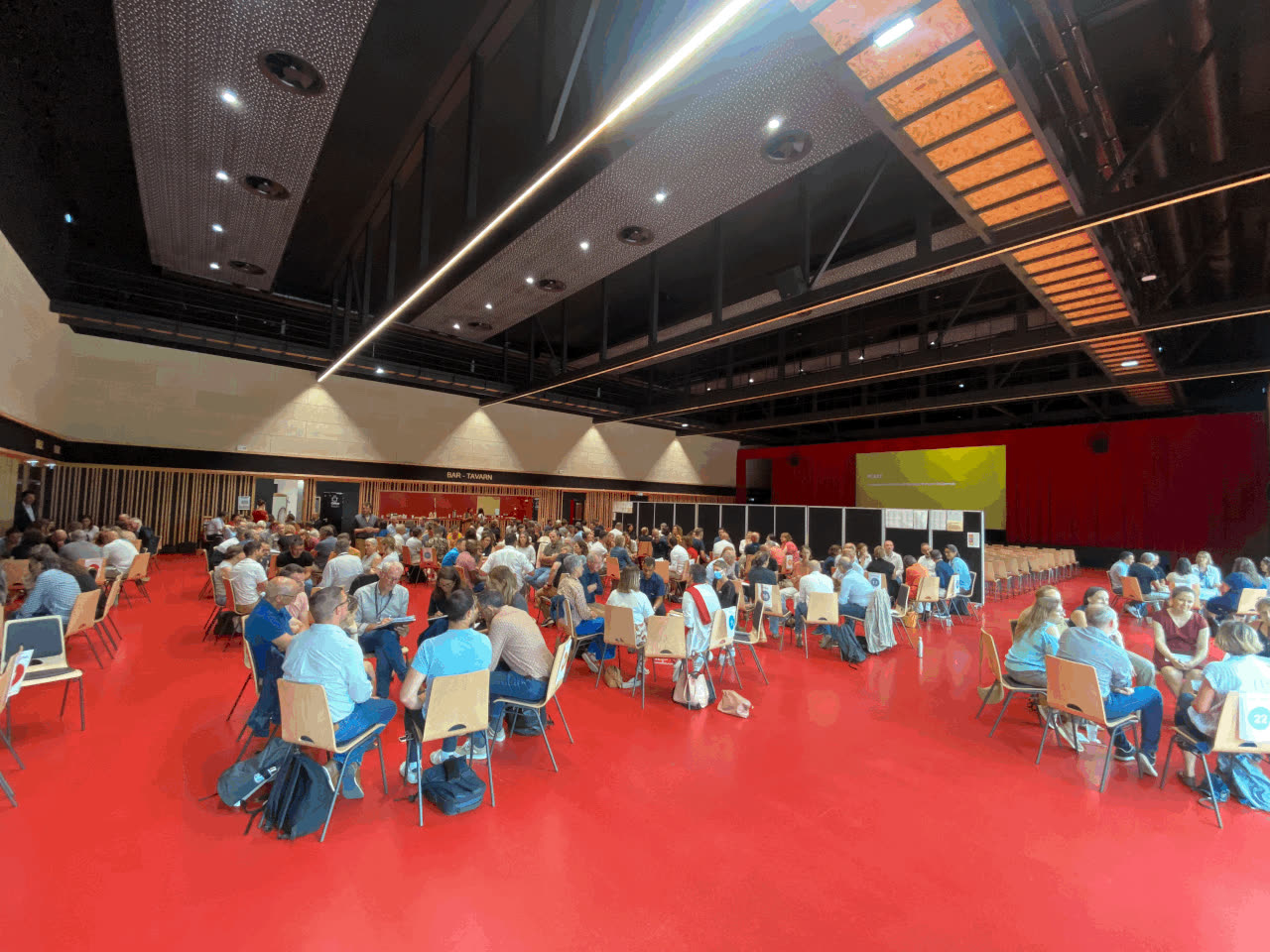
- At Orange, more than 1,800 employees of the Enterprise France division, 20% of its workforce, have taken part in the workshops, and participants created an Ecofrugal community to keep the experience going. Emmanuelle, who started on her own, presents them internally as "Tupperware workshops".
“Externally, it's also proof of our commitments, which we are increasingly asked to demonstrate. For example, in a call for tenders, we can answer that more than 1,800 employees of our division, 20% of our workforce, have already taken part in the workshops.”Emmanuelle, Orange
- At Quimper Bretagne Occidentale, nearly 250 managers met in 2025 for an XXL Ecofrugal Workshop. Among the ideas that came up: a compost get-together between colleagues, an email-free day to visit other departments in person, a car-pooling platform, and even an Environment House.
- At Bpifrance, nearly 350 employees have taken part in the workshops. Its 2020 sustainability report (in French) states that employees get involved in changing internal practices, notably "by taking part in Ecofrugal-type workshops". As part of its Climate Plan, employees also brought practical proposals to the executive committee through a working group.
- At a university, a lunchtime workshop gave one participant the idea of opening an online space to keep sharing recipes and tips.
- Between neighbours in Antony, the zero waste workshop was followed by one on food, and they now lend each other equipment through a WhatsApp group.
“My colleagues and I set up a composter.”Juliette
And all this happens wherever people can sit together: on the terrace of a bar-brasserie near Chambéry, in a youth hostel in Pontarlier, and as far as Menlo Park, California. Our booklets also travel much further: the CFDT trade union offers them to its elected representatives, and an ADEME roadmap for local authorities lists our workshops among the freely available tools to bring people together and get them involved.
What committed women employees tell us
On the ground, it is mostly women who bring their colleagues and loved ones along. Let's say it: they are the driving force of the transition. In 2024, we surveyed them. They don't represent all employees, since they already act, and that's what makes their view valuable for management.
Source: survey of women employees committed to the ecological transition (in French), Ecofrugal, 2024. To receive the full study, write to us at team@monatelier-ecofrugal.fr.
“I helped convince our director not to mow the lawn short. The clover flowers are thriving and the pollinators love them!”Testimonial, 2024 survey
What we take away for management
- Consult those who want to act, and come back to them with answers.
- Train all teams with fun, participatory methods, starting with management.
- Give resources to communities of committed employees: time, a budget, freedom to act, recognition.
How we measure, and what we don't know
Our figures come from what people tell us: the Solution-holders Observatory (March-April 2020, 5 articles on LinkedIn, in French), the survey of committed women employees (July 2024, 143 answers, 88 of them from employees) and the workshop reports published on our site. We also draw on interviews with Orange, Gaëtan Brisepierre and the CFDT (in French).
These results have their limits, and we prefer to tell you about them.
- They are statements, not measurements. We have not followed the same people before and after the workshop, and we can't say how much CO2 a workshop avoids.
- Those who answer are volunteers, so often the most convinced.
- Trying is not adopting. 62% of those who try don't adopt everything: you have to convince your household, find an affordable offer, have the time (2020 Observatory).
- A workshop doesn't replace a strategy. It opens the conversation and reveals those who want to act. What happens next depends on the resources the organisation devotes to it, and one obstacle comes up regularly: management not listening.
“Our everyday actions will not, on their own, solve the big environmental problems. But they can help us live better in these times. [...] We may not change the world tomorrow morning. But we can already change something today.”Philippe, founder of Ecofrugal
The best way to make up your own mind is still to try.


