

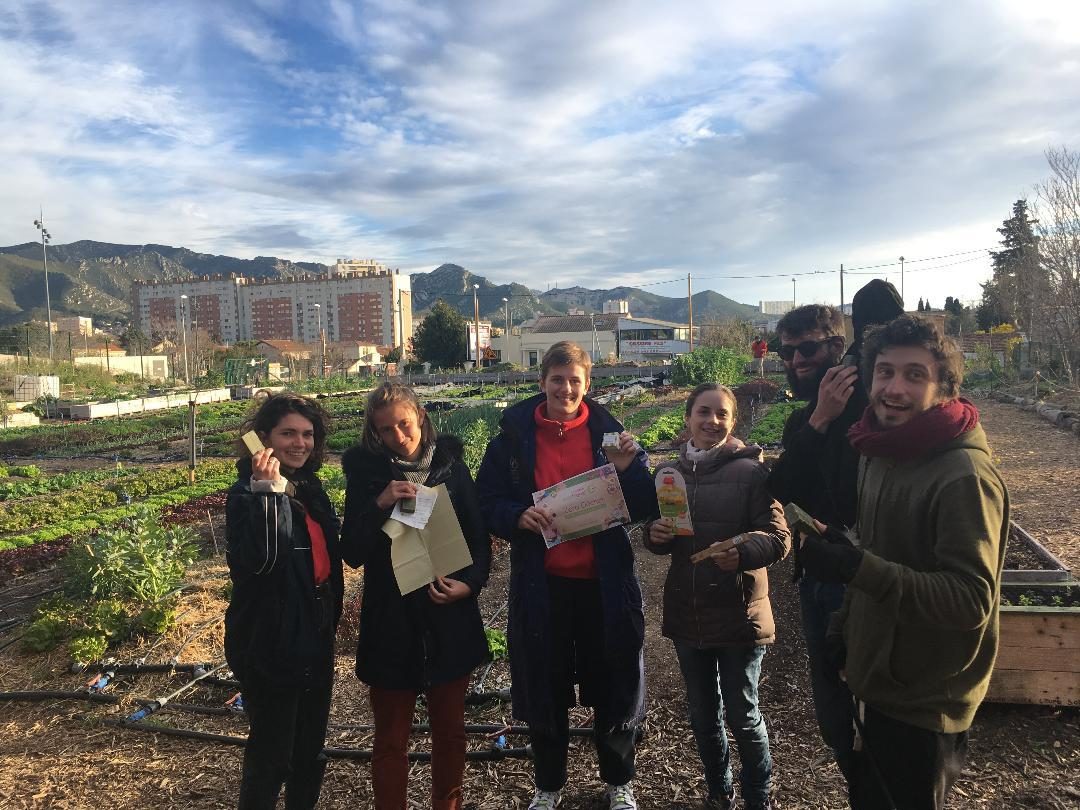
Biodiversity workshop: 9 ideas to help nature
Birds, pollinating insects, earthworms, hedges, ponds… Biodiversity feeds us, heals us and makes our lives more beautiful, but it is collapsing at an unprecedented rate. The Ecofrugal Biodiversity workshop brings neighbours, colleagues or friends together to share what everyone can do, at home, in the garden, on the balcony, at work or in their town. It's free, friendly and open to all: no need to be a naturalist, the facilitation booklet guides you step by step.
In English too. Workshops can be run in English. The booklet is written in French and its English version is being prepared: contact us to receive a translated copy.
Why talk about biodiversity?
Often ranked behind the climate in the order of emergencies, biodiversity is not in competition with it: the two crises are linked and must be tackled together. And we ourselves are part of this living fabric, on which our water, our air, our food… and our quality of life depend. Good news: many actions are within everyone's reach, and many of them also save money.
The 9 ideas to help biodiversity
The ideas of the workshop follow the main causes of the decline of nature identified by the scientists of IPBES, the IPCC of biodiversity. The group chooses the ones it is most interested in.
1. I understand why protecting biodiversity matters
What is biodiversity, what does it do for us, why is it declining? A first moment to share what everyone already knows, and the five main causes of the decline: habitat destruction, overexploitation of species, climate change, pollution and invasive alien species.
2. I act to reduce the destruction of natural habitats
Leaving a wild corner in the garden, planting a mixed hedge rather than a fence, avoiding concrete, choosing fences that let hedgehogs through… and not buying peat-based compost, which comes from precious wetlands.
3. I act to avoid the overexploitation of species
Choosing your fish according to the season and sustainable fishing labels, wood and paper from sustainably managed forests, never buying protected wild species as travel souvenirs.
4. I act to limit the effects of climate change
All the habits that reduce our carbon footprint — travelling differently, eating less meat, saving energy — also protect nature. The Mobility, Food and Energy saving workshops are there to go further.
5. I act to limit air, water and soil pollution
In France, since 2019, individuals are no longer allowed to use chemical pesticides in the garden: old products go back to the recycling centre. You can also choose simple cleaning products and organic farming, and never pour anything that pollutes rivers down the drain.
6. I act to limit invasive alien species
Never releasing a pet into the wild, avoiding plants known to be invasive, asking a garden centre or a local association for advice.
7. I act to know and record nature
We can only protect what we know! Citizen science lets everyone contribute to research: counting the birds in your garden, photographing pollinating insects, reporting a hedgehog, taking part in your town's biodiversity atlas. In France, the INPN Espèces app helps you identify wildlife and plants, with the whole family.
8. I act to protect and restore biodiversity
Cutting late rather than mowing, letting wild flowers grow, keeping dead wood and a pile of leaves, creating a pond, putting up suitable nesting boxes… A garden, a balcony or a company's green space can become a real refuge. Beware of "false good ideas": it's best to get advice from naturalist associations.
9. I act by raising awareness around me
Introducing your children to nature, sharing your discoveries, proposing a project at work or in your building, organising a nature walk… and why not run a biodiversity workshop yourself!
Want to go further? The Shared housing and Saving water workshops also offer ideas to welcome nature into town and protect water.
How does a biodiversity workshop work?
1. You create your workshop on monatelier-ecofrugal.fr, open to the public or for your guests only, in person or online.
2. You bring 8 to 12 people together — neighbours, colleagues, friends, members of an association or a community garden — and why not outdoors, in a park or a garden.
3. You run it with the booklet: a ready-to-read script, mini-quizzes and questions to get everyone talking. The length is flexible: we recommend one hour, choosing the ideas the group is most interested in; the full workshop lasts about an hour and a half.
4. Everyone leaves with their own action list to put into practice at home, at work or in their town.
The golden rule: no debate, we talk about solutions. Everyone talks about what they do or would like to do, we give each other ideas and good addresses, and learn from each other. It feels more like a neighbourhood party than a training course.
Because the workshop is also a chance to discover everyone's hidden talents — the amateur birdwatcher, the compost queen, the colleague who knows every tree in the area — and to grow together the wish to act. Caring for nature also means caring for the bonds between us: the workshop helps bring back community and mutual help, close to home.
I'll run a biodiversity workshopA booklet designed with Orange
The Biodiversity booklet was co-designed with Orange. It also helps companies, local authorities and associations take practical action for nature, by involving their teams.
More broadly, Mon Atelier Ecofrugal is listed by ADEME Académie (the French Agency for Ecological Transition) among the facilitation tools that support behaviour change. Since 2018, more than 1,000 Ambassadors have organised workshops all over France, and more than 10,000 participants have taken part.
Ecofrugal survey of members, July 2024. See what it changes
Frequently asked questions
Do I need to know about nature or have a garden?
No! The workshop is open to everyone, city dwellers included. Many ideas concern our consumption, our balcony or our workplace, and the solutions come from the participants.
Can we do the workshop with children?
The workshop is designed for adults, but the "raising awareness around me" idea gives plenty of ways to discover nature as a family.
How much does it cost?
Nothing. Signing up, the facilitation booklet and the workshop are free, and the Ambassador who runs it is a volunteer.
And at work?
Yes, and it's always free if an employee runs the workshop with the booklet: talk to your HR, CSR or facilities team, for example to imagine together how to manage the green spaces. Organisations that want to involve a large number of people can book the XXL Ecofrugal Workshop, run by an Ecofrugal Coach. This paid format is presented on ecofrugal.fr (in French).
To go further
Find many solutions to consume and live while protecting nature in Le Guide Écofrugal (Leduc, 2025, in French), with a foreword by Fabrice Bonnifet. Biodiversity runs through all its sections: eating less meat, reducing waste, saving water or travelling differently also means acting for nature. More than 500 solutions to save money and reduce your ecological footprint, at work and at home.
Become an Ambassador and get the booklet (free)


