

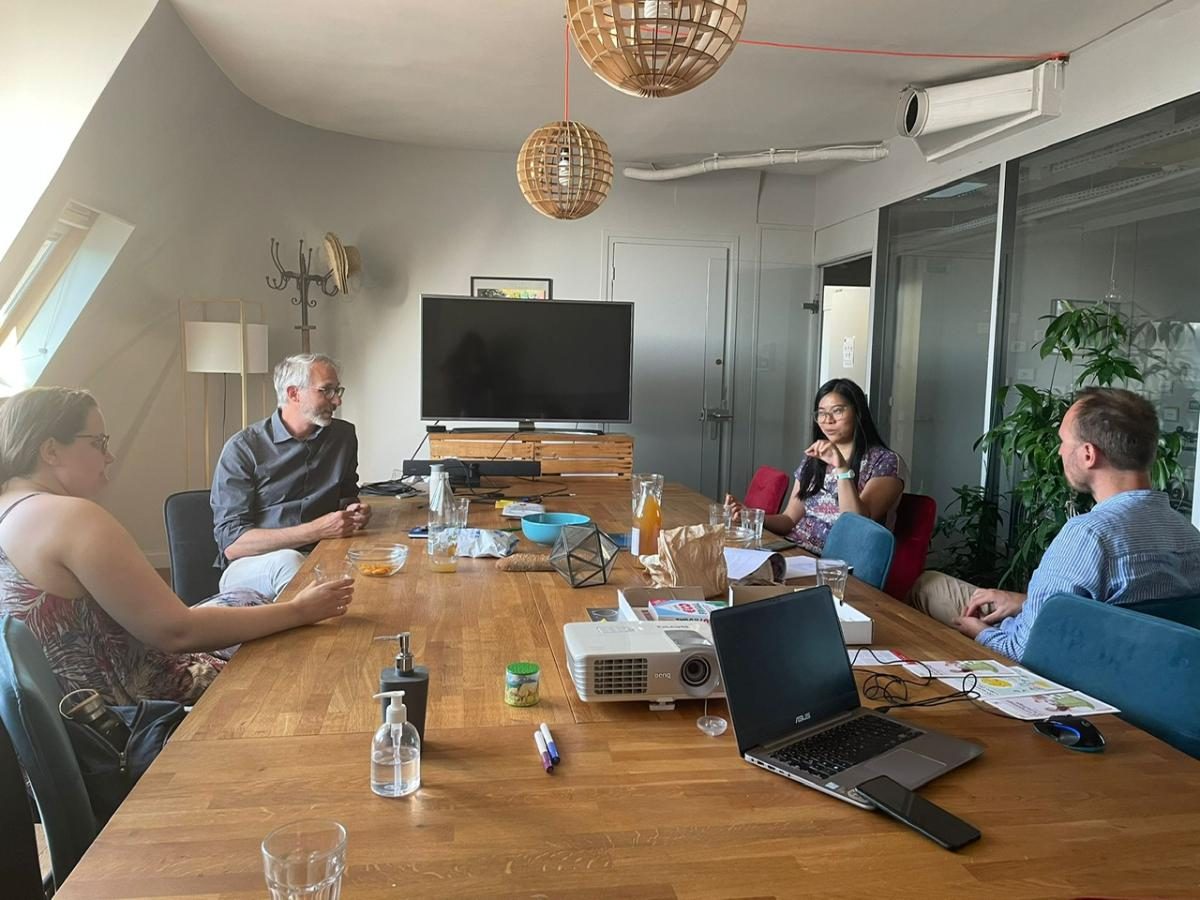
Saving water workshop: 8 ideas to use less water
Droughts, water restrictions, rising bills: water is no longer a resource we can waste without thinking. The Ecofrugal Saving water workshop brings neighbours, colleagues or friends together to share the right habits: spotting a leak, choosing a water-saving shower head, watering smartly, collecting rainwater… It's free, friendly and open to all: the facilitation booklet guides you step by step.
In English too. Workshops can be run in English. The booklet is written in French and its English version is being prepared: contact us to receive a translated copy.
Why talk about water?
At home, personal hygiene accounts for nearly 40% of our water use, laundry and dishes 22%, and toilets 20% (ADEME). All areas where we can easily act… and lower our bill. The French government has also set the goal of cutting water withdrawals by 10% by 2030, with the Water plan launched in 2023.
The 8 ideas for saving water
These are the 8 ideas for action discussed during the workshop. The group chooses the ones it is most interested in, at home, at work or in the garden.
1. I measure and monitor my water use
Do you know how much water you use? Reading your meter regularly, or tracking your consumption online when possible, helps you spot habits… and anomalies.
2. I detect and report leaks
There's no such thing as a small leak: a dripping tap means about €190 lost per year, and a leaking toilet cistern up to €950 (ADEME). Tip: read the meter in the evening and in the morning without using any water. If it has moved, there's a leak! At work or in your building, report the leaks you notice in the common areas.
3. I adopt good habits
Taking a shower rather than a bath, turning off the tap while brushing your teeth or soaping, running the washing machine and dishwasher only when full, using the small flush button… A recent dishwasher actually uses less water than washing up by hand.
4. I use water-saving equipment
Water-saving shower heads, flow restrictors (aerators) on taps, dual-flush toilets: this equipment costs a few euros and quickly pays for itself, on the water bill and on the energy bill, since hot water also costs money to heat.
5. I save water in the garden and green spaces
Watering in the evening, mulching the soil, choosing plants suited to the local climate, installing drip irrigation, trying ollas (buried terracotta pots that release water slowly): a garden can be beautiful and frugal.
6. I collect rainwater
A rainwater butt lets you water the garden, wash the car or the floors without using drinking water. Only a small part of our uses really needs drinking water!
7. I help manage water well
Letting rainwater soak into the ground rather than paving everything over, greening a courtyard or a car park, never pouring anything that pollutes water down sinks or toilets (wipes, oils, medicines, cigarette butts)… At the scale of a building, a company or a town, these collective actions make a big difference.
8. I reduce my water footprint
Behind every object, every food, every piece of clothing lies an invisible water consumption, often far greater than what comes out of the tap. Making your devices last, buying second-hand, eating seasonal food and less meat also reduce this "virtual water".
Want to go further? The Energy saving (for hot water), Shared housing and Biodiversity workshops also look at water from other angles.
How does a saving water workshop work?
1. You create your workshop on monatelier-ecofrugal.fr, open to the public or for your guests only, in person or online.
2. You bring 8 to 12 people together — neighbours, colleagues, friends, members of an association or a community garden.
3. You run it with the booklet: a ready-to-read script, mini-quizzes and questions to get everyone talking. The length is flexible: we recommend one hour, about 8 minutes per idea. The group chooses the ideas it is most interested in, and picks up the others at a later meeting.
4. Everyone leaves with their own action list to put into practice at home, at work or in the garden.
The golden rule: no debate, we talk about solutions. Everyone talks about what they do or would like to do, we give each other ideas and good addresses, and learn from each other. It feels more like a neighbourhood party than a training course.
Because the workshop is also a chance to discover everyone's hidden talents — the gardener who hardly waters any more, the handywoman who fixes leaks in no time — and to grow together the wish to act. Protecting water is everyone's business: the workshop helps bring back community, connection and mutual help around a common good.
I'll run a saving water workshopA booklet designed with Orange
The Saving water booklet was co-designed with Orange. It also helps companies and local authorities involve their teams in implementing the French Water plan.
More broadly, Mon Atelier Ecofrugal is listed by ADEME Académie (the French Agency for Ecological Transition) among the facilitation tools that support behaviour change. Since 2018, more than 1,000 Ambassadors have organised workshops all over France, and more than 10,000 participants have taken part.
Ecofrugal survey of members, July 2024. See what it changes
Frequently asked questions
Do I need a garden to take part?
Not at all! Most ideas concern the bathroom, the kitchen and the toilets. The ideas about gardens and rainwater will interest those with an outdoor space, a balcony or a community garden.
Do I need to be an expert to run the workshop?
No. The solutions come from the participants: your role is to introduce the topics and give everyone the floor. The booklet gives you the whole running order, with figures to feed the discussion.
How much does it cost?
Nothing. Signing up, the facilitation booklet and the workshop are free, and the Ambassador who runs it is a volunteer.
And at work?
Yes, and it's always free if an employee runs the workshop with the booklet: talk to your HR, CSR or facilities team. Organisations that want to involve a large number of people can book the XXL Ecofrugal Workshop, run by an Ecofrugal Coach. This paid format is presented on ecofrugal.fr (in French).
To go further
Solutions to save water are developed in the Housing ("Saving water") and Food ("Water") sections of Le Guide Écofrugal (Leduc, 2025, in French), with a foreword by Fabrice Bonnifet. More than 500 solutions to save money and reduce your ecological footprint, at work and at home.
Become an Ambassador and get the booklet (free)


