

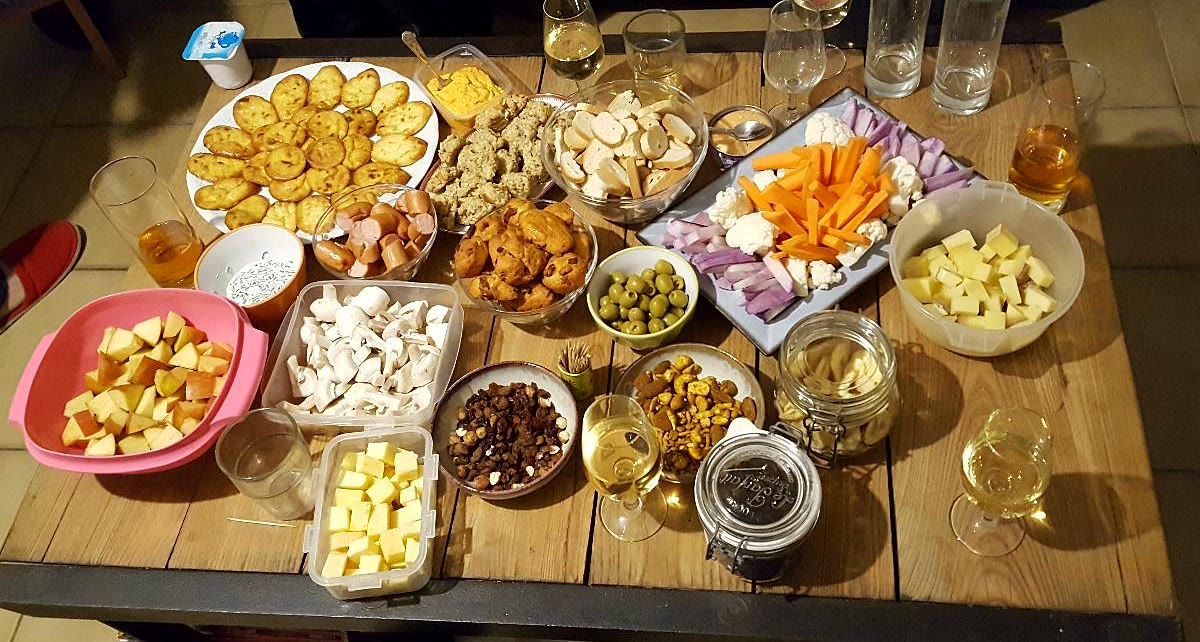
Food workshop: 11 ideas to eat better without spending more
Does eating better always cost more? Not if you go about it the right way! With Mon Atelier Ecofrugal, you bring neighbours, friends or colleagues together around a table to share your favourite shops, your quick recipes and your tips for eating better. No need to be a chef or a nutrition expert: anyone can do it, the facilitation booklet guides you step by step, and it's free.
In English too. Workshops can be run in English. The booklet is written in French and its English version is being prepared: contact us to receive a translated copy.
Why talk about food?
Food is one of the areas where everyone can act from today, three times a day! And contrary to popular belief, eating healthier and more sustainably often saves money: fewer ready meals, less waste, more fresh and seasonal produce. That's the whole idea of eco-frugality: doing yourself good, for your wallet as for the planet.
The 11 ideas for sustainable food
These are the 11 ideas for action discussed during the workshop. Everyone picks the ones that suit them, depending on their tastes, budget and time.
1. I read the labels
Price per kilo to compare, Nutri-Score, list of ingredients and additives, allergens, fair trade or sustainable fishing labels: the label says a lot. Apps such as Open Food Facts let you scan products in the shop. Good to know: on eggs sold in Europe, the first digit of the code shows how the hens were raised, from 0 (organic, free range) to 3 (caged).
2. I buy fresh, local, direct from producers and in season
At the market, from local shops, at the farm, through a community-supported agriculture scheme or a farmers' shop: seasonal produce tastes better, is often cheaper, and has travelled less. A seasonal fruit and vegetable calendar helps you find your way. According to Le Guide Écofrugal, loose carrots cost three to six times less than carrots in a tray.
3. I buy organic when possible
EU organic logo, Nature & Progrès, Demeter, Bio Cohérence… No need to switch everything to organic at once: you can start with the products you eat the most, or those you don't peel. Bulk buying and farmers' shops make organic food more affordable.
4. I go for homemade
Soups, quiches, pasta, yoghurts, cakes, bread… Cooking yourself means fewer additives, less sugar and salt, less packaging, and real savings compared with ready meals. Tip: cook large quantities at the weekend for the whole week ("batch cooking").
5. I vary my diet
Varying your sources of protein, grains, fruit and vegetables is good for your health and for the planet. Pulses (lentils, chickpeas, beans) are filling, cheap and easy to cook: French nutritional guidelines recommend eating them at least twice a week.
6. I eat less meat… and why not go vegetarian?
Without necessarily becoming vegetarian, eating less meat and sometimes replacing it with pulses, eggs or tofu is one of the most effective ways to reduce your footprint… and your budget. French school canteens offer at least one vegetarian menu a week. During the workshop, everyone shares their recipes and favourite places.
7. I reduce my food packaging and waste
Bulk buying, a lunch box at work, a reusable pouch for snacks, cooking with leftovers (French toast, soups, vegetable tops), freezing… and compost for peelings. Less waste means less money thrown in the bin.
8. I drink responsibly
In France, tap water is tested and far cheaper than bottled water: a jug at home, a water bottle at work, and that's it. Flavoured water or homemade sodas with a syrup, organic wine, beer from a local brewer: there are other ways to treat yourself… in moderation.
9. I eat better when I eat out
Organic or "homemade" restaurants, a doggy bag for leftovers (French restaurants must provide one on request), school and company canteens: by joining forces with other parents or colleagues, you can ask for more organic, local or vegetarian food.
10. I grow some of my own food
Herbs on the balcony, a vegetable patch, a community garden, fruit trees, a few hens… Producing some of your own food is cheap, rewarding and brings people together when you share your harvest with your neighbours.
11. I stay fit
Eating well goes hand in hand with moving: 30 minutes of physical activity a day, walking, cycling, running, yoga… The best partner for a balanced diet!
Want to go further on food waste and composting? The Ecofrugal Zero waste workshop also has several ideas for action on them.
How does a food workshop work?
1. You create your workshop on monatelier-ecofrugal.fr, open to the public or for your guests only.
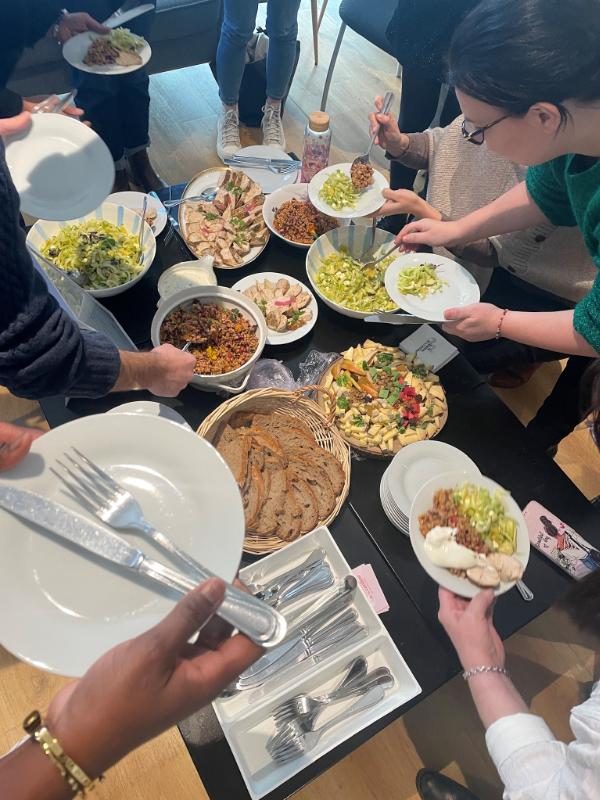
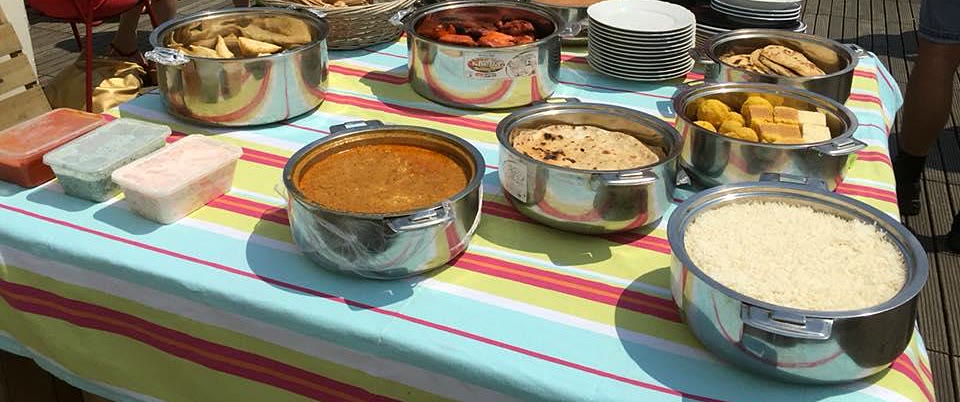
2. You bring 8 to 12 people together — neighbours, friends, colleagues, members of an association — at home, at the office over a lunch break, in an association… or around a vegetarian picnic where everyone brings a homemade dish!
3. You run it with the booklet: a ready-to-read script and questions to get everyone talking. The length is flexible: we recommend one hour. The group chooses the ideas it is most interested in, and picks up the others at a later meeting.
4. Everyone leaves with their own action list to put into practice at home. You can finish with a small activity: tasting a plant-based cake, a quick recipe, an introduction to composting…
The golden rule: no debate, we talk about solutions. The big controversies about farming or the food industry are not today's topic: everyone talks about what they do or would like to do to eat better, and that's the strength of the workshop. We give each other ideas, recommend good places, and learn from each other. It feels more like a neighbourhood party than a training course!
Because the workshop is much more than a list of tips: it's a time of sharing where you discover the hidden talents of your neighbours or colleagues — the homemade bread champion, the queen of leftover recipes — and where together we grow the wish to act. At a time when everything pushes us to consume alone, each behind our own screen, it helps bring back community, connection and mutual help, close to home.
And once the first workshop is over, nothing stops you from continuing with other themes: zero waste, saving water, biodiversity, mobility…
I'll run a food workshop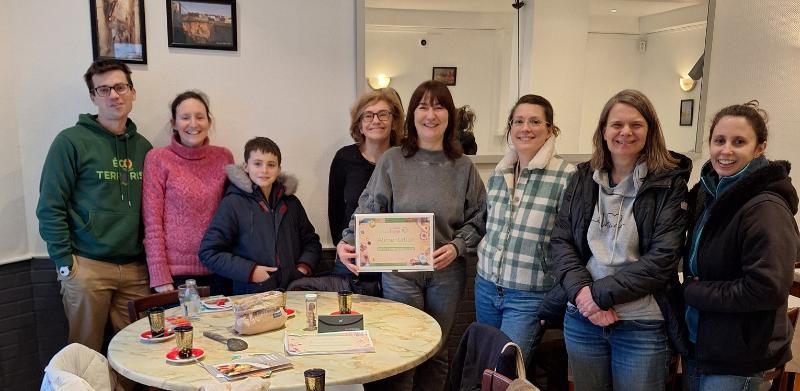
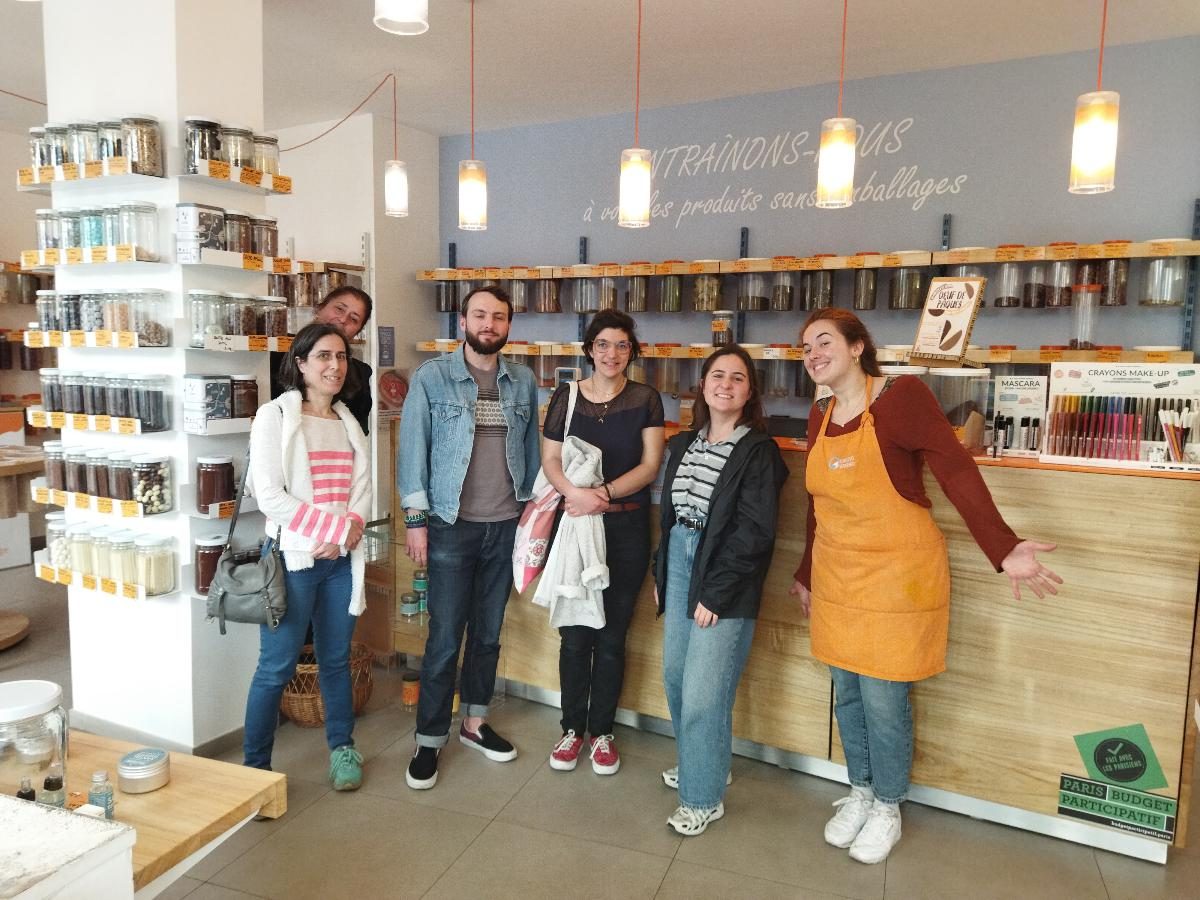
A recognised tool
Mon Atelier Ecofrugal is listed by ADEME Académie (the French Agency for Ecological Transition) among the facilitation tools that support behaviour change. Since 2018, more than 1,000 Ambassadors have organised workshops all over France, and more than 10,000 participants have taken part.
Ecofrugal survey of members, July 2024. See what it changes
Frequently asked questions
Do I need to know about nutrition or cooking?
No. The workshop relies on collective intelligence: the solutions come from the participants. The booklet gives you the running order and the questions to get the conversation going.
Do I need to be vegetarian or eat organic to take part?
Not at all! The workshop is open to everyone, whatever their habits. Nobody is judged: everyone goes at their own pace and chooses the ideas that suit them.
How much does it cost?
Nothing. Signing up, the facilitation booklet and the workshop are free, and the Ambassador who runs it is a volunteer.
Where can I hold the workshop?
At home, in a common room of your building, at work over a lunch break, in an association, a library, a café… or outdoors over a picnic. In France or abroad, and even online.
Do we receive any materials?
For food workshops, a box of documentation and small gifts can be sent to the organiser as soon as 7 participants have signed up, in addition to the organiser, while stocks last, in mainland France and Corsica.
And at work?
Yes, and it's always free if an employee runs the workshop with the booklet: talk to your HR or CSR team to get a room. Organisations that want to involve a large number of people can book the XXL Ecofrugal Workshop, run by an Ecofrugal Coach. This paid format is presented on ecofrugal.fr (in French).
To go further
The ideas of the workshop are developed in detail in the Food section of Le Guide Écofrugal (Leduc, 2025, in French), with a foreword by Fabrice Bonnifet: compost and food waste, homemade, water, local, seasonal and organic food, meat… More than 500 solutions to save money and reduce your ecological footprint, at work and at home.
Become an Ambassador and get the booklet (free)


