

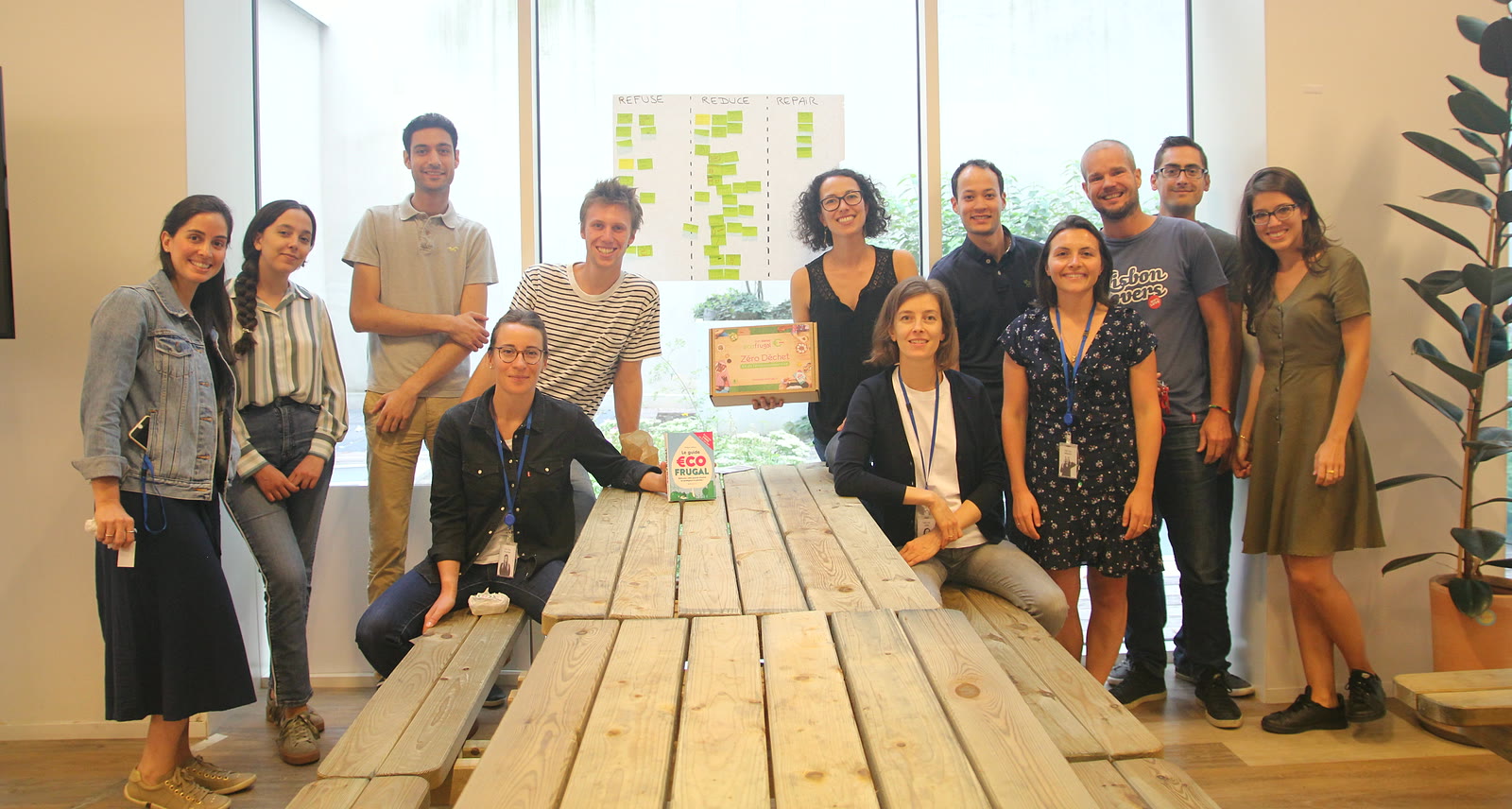
Zero waste workshop: 11 ideas to reduce your waste
Less waste means less spending. With Mon Atelier Ecofrugal, you bring a few neighbours, friends or colleagues together around a table, and everyone shares what they already do or would like to try. No need to be a zero waste expert: anyone can do it, the facilitation booklet guides you step by step, and it's free.
In English too. Workshops can be run in English. The booklet is written in French and its English version is being prepared: contact us to receive a translated copy.
Why go zero waste?
Everything we throw away was bought first. Reducing your waste therefore also lightens your budget: fewer disposable products, less packaging paid for at a high price, less wasted food, things that last longer. That's the whole idea of eco-frugality: simple habits that are good for both the planet and your wallet.
The 11 zero waste ideas
These are the 11 ideas for action discussed during the workshop. Easy to remember, they follow the 7 Rs rule: Refuse what you don't need, Reduce, Repair, Reuse, Recycle, Return to the earth… and Rally others!
1. I give up disposables
Cups, coffee pods, wipes, cotton pads, razors, batteries, fruit pouches… For almost every disposable item, there is a reusable version: water bottle, mug, washable wipes, rechargeable batteries. Before each purchase, one question is enough: do I really need it, and is there a durable version?
2. I reduce my packaging and discover bulk buying
Pasta, rice, pulses, cereals, oil, cleaning products: more and more shops sell them loose. You buy just the right amount, in your own jars or cloth bags. Choosing unprocessed products and homemade food also cuts packaging a lot.
3. I repair and make my things last
A protected phone lasts longer, and a repaired appliance often costs less than a new one. Online tutorials, Repair Cafés near you, cobblers and tailors… In France, the official website longuevieauxobjets.gouv.fr helps you find a repairer, and the repair bonus lowers the bill with approved professionals.
4. I buy second-hand
Furniture, clothes, books, toys, refurbished electronics: second-hand saves a lot of money. Car boot sales, classified ads websites, charity shops, and social economy networks such as Emmaüs, Envie or reuse centres.
5. I borrow and I lend
A drill is used for only a few minutes in its whole life. Why buy one? Libraries, toy libraries, tool libraries, neighbourhood groups: borrowing is free and brings people together.
6. I swap
A clothes swap evening with friends, exchanging services in a time bank, a surprise item brought to the workshop… Swapping gives a second life to what is gathering dust in our cupboards.
7. I give and I take
Give-boxes in a building's hall or at the office, book boxes, free markets, websites and apps for giving between individuals: what you no longer want will make someone else happy.
8. I reduce food waste
Check your cupboards before shopping, plan your meals, make a list, cook and freeze leftovers, turn stale bread into French toast and bruised fruit into compote. Good to know: a "best before" date is not a safety limit, unlike a "use by" date. Anti-waste apps also let you buy products close to their date at a low price.
9. I make my own cleaning and hygiene products
Four basic products replace a good part of the bottles in the cupboard: white vinegar, baking soda, black soap and Marseille soap. Washing-up liquid, all-purpose cleaner, laundry detergent, deodorant: the recipes are simple, cheap and free of excess packaging.
10. I sort and recycle
In France, since 1 January 2023, all packaging — including yoghurt pots, trays, films and plastic bags — goes in the recycling bin everywhere (glass stays separate). If in doubt, check your local rules. Also think of the recycling centre, clothes collection points and returning used electrical appliances to the shop.
11. I compost
Peelings and food scraps make up a large share of the general waste bin. Garden composter, wormery in a flat, shared composter at the foot of the building: in France, since 2024, local authorities must offer every resident a way to sort their food waste.
Want to go further on food waste and composting? The Ecofrugal Food workshop also has several ideas for action on them.
How does a zero waste workshop work?
1. You create your workshop on monatelier-ecofrugal.fr, open to the public or for your guests only.
2. You bring 8 to 12 people together — neighbours, friends, colleagues, members of an association — at home, at the office, in a café or even over a picnic.
3. You run it with the booklet: a ready-to-read script, quizzes, and questions to get everyone talking. The length is flexible: we recommend one hour. The group chooses the ideas it is most interested in, and picks up the others at a later meeting.
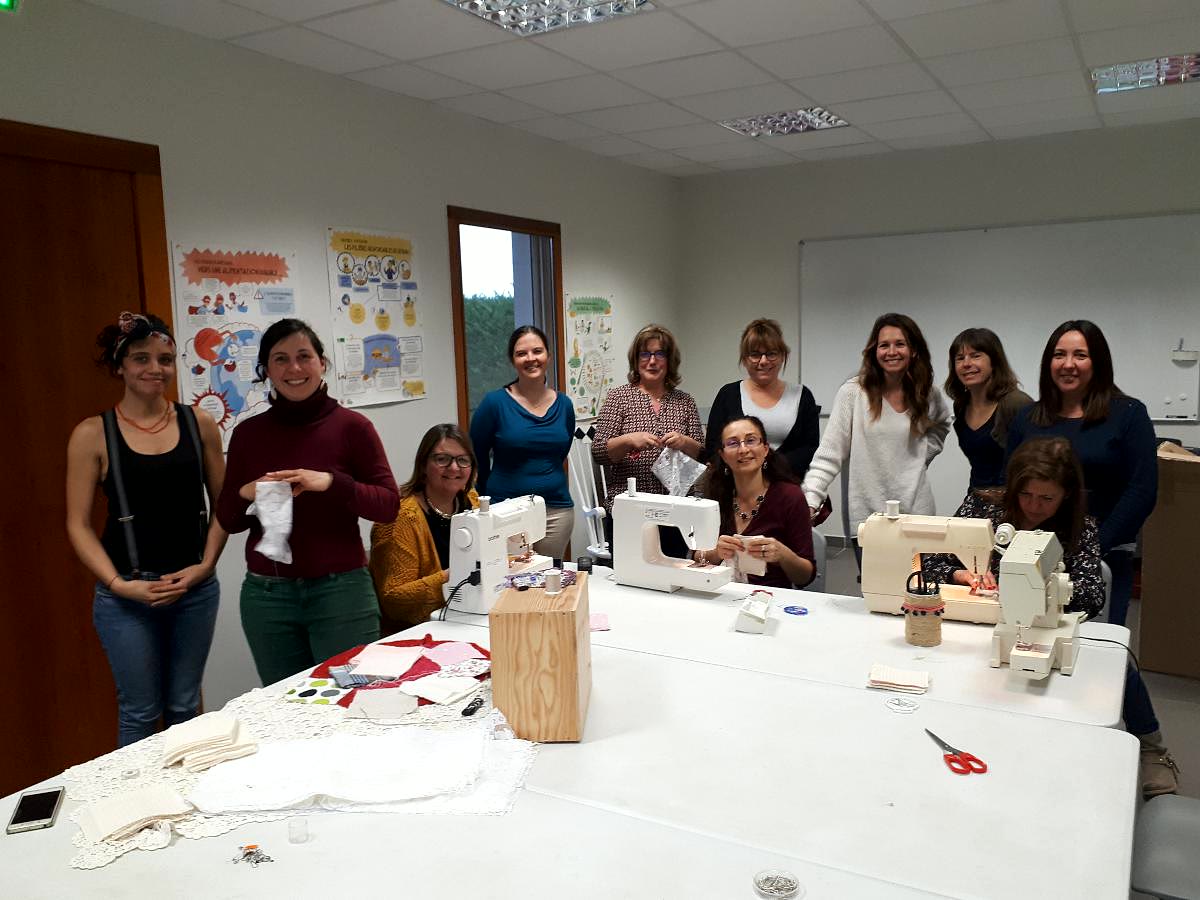
4. Everyone leaves with their own action list to put into practice at home. Some groups finish with a small hands-on activity: a tawashi sponge, furoshiki wrapping, homemade deodorant…
The golden rule: no debate, we talk about solutions. What can we do, here and now, at home, at work or in our association? Everyone talks about what they do or would like to do, and that's the strength of the workshop: we give each other ideas, recommend good places, and learn from each other. It feels more like a neighbourhood party than a training course!
Because the workshop is much more than a list of tips: it's a time of sharing where you discover the hidden talents of your neighbours or colleagues, and where together we grow the wish to act. At a time when everything pushes us to consume alone, each behind our own screen, it helps bring back community, connection and mutual help, close to home.
The booklet also comes in a junior version (ages 9-14), to run the workshop with young people. And once the first workshop is over, nothing stops you from continuing with other themes: food, responsible digital, saving water, mobility…
I'll run a zero waste workshop

A recognised tool
Mon Atelier Ecofrugal is listed by ADEME Académie (the French Agency for Ecological Transition) among the facilitation tools that support behaviour change. Since 2018, more than 1,000 Ambassadors have organised workshops all over France, and more than 10,000 participants have taken part.
Ecofrugal survey of members, July 2024. See what it changes
“The freely available facilitation booklets guide us step by step. I like the free, bottom-up, DIY approach. It's also low-tech and friendly. […] The Ecofrugal Zero waste workshop lets you talk with your colleagues and get answers about the solutions available to us here and now.”
— Emmanuelle Temkine, Ecofrugal Ambassador, CSR and innovation director of Orange's Enterprise France division (from Le Guide Écofrugal, 2025, our translation)
“Reducing waste and developing responsible consumption are only possible with a lasting change in everyday behaviour. The Ecofrugal project contributes to this by sharing practical, positive experiences.”
— Marc Cheverry, then director of circular economy at ADEME (2018, our translation)
Frequently asked questions
Do I need to be a zero waste expert to run a workshop?
No. The workshop relies on collective intelligence: the solutions come from the participants. The booklet gives you the running order, the questions and the quizzes.
How much does it cost?
Nothing. Signing up, the facilitation booklet and the workshop are free, and the Ambassador who runs it is a volunteer.
What's the difference with a Fresk?
Fresks help you understand the causes and consequences of an issue. The Ecofrugal Workshop starts from solutions: everyone shares what they already do and leaves with practical ideas to apply straight away. The two work very well together. Some participants then explore the topic further with a Fresk; others, after a Fresk, come to an Ecofrugal workshop to find practical solutions.
Where can I hold the workshop?
Anywhere, as long as people can sit around a table and hear each other: at home, in a common room of your building, at work, in an association, a library or a café. In France or abroad, and even online.
And at work?
Yes, and it's always free if an employee runs the workshop with the booklet: talk to your HR or CSR team to get a room. Organisations that want to involve a large number of people can book the XXL Ecofrugal Workshop, run by an Ecofrugal Coach. This paid format is presented on ecofrugal.fr (in French).
Do we receive any materials?
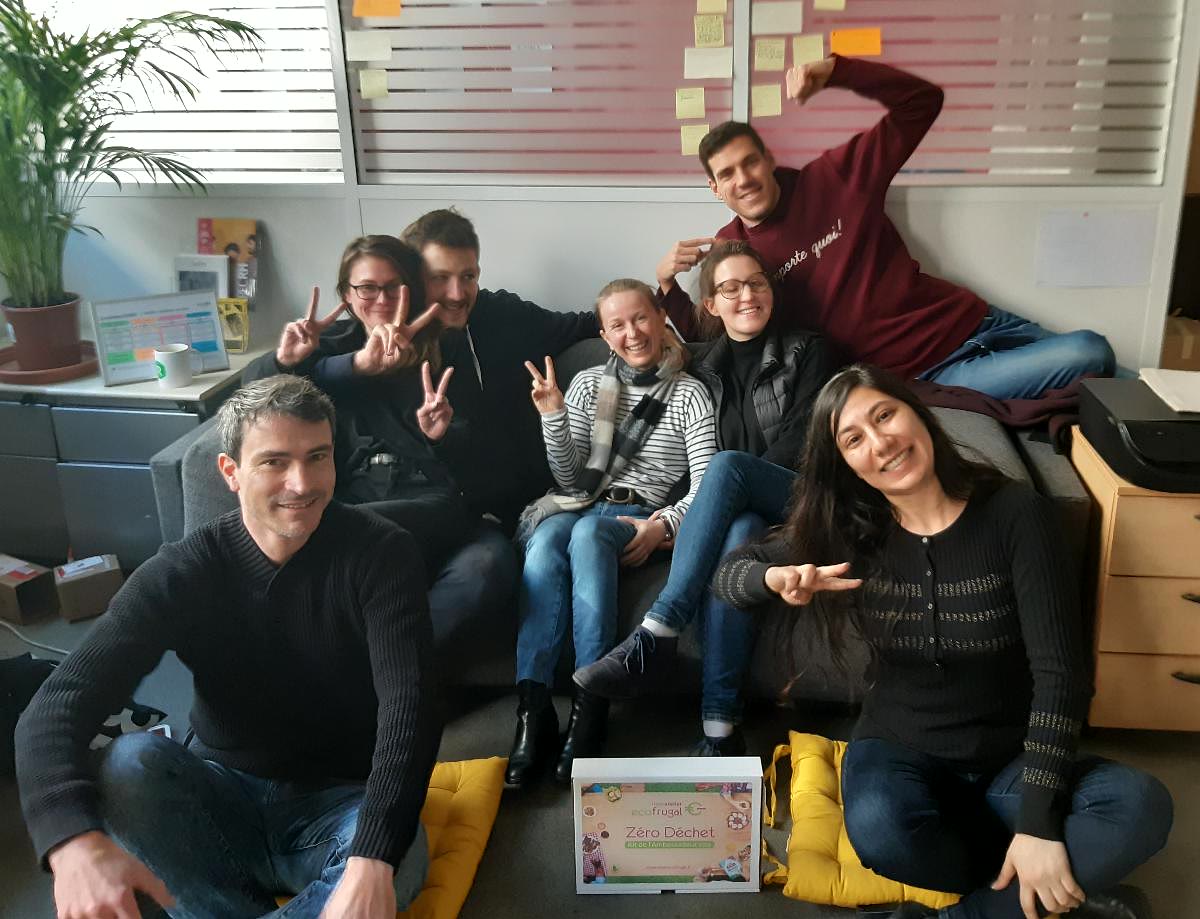
For zero waste workshops, a box of documentation and small gifts can be sent to the organiser as soon as 7 participants have signed up, in addition to the organiser, while stocks last, in mainland France and Corsica.
To go further
The ideas of the workshop are developed in detail in the Consumption section of Le Guide Écofrugal (Leduc, 2025, in French), with a foreword by Fabrice Bonnifet: reducing packaging, switching from disposable to reusable, sharing, buying second-hand, repairing, recycling… More than 500 solutions to save money and reduce your ecological footprint, at work and at home.
Become an Ambassador and get the booklet (free)


